
A beautiful yard doesn’t have to come with a hefty price tag. With the right approach, homeowners can create an attractive, well-maintained landscape without hiring a professional crew or making a major financial investment. Landscaping on a budget is less about cutting corners and more about making smart decisions. Whether you’re starting from scratch or refreshing an existing yard, these practical tips will help you get the most out of every dollar.
Landscaping on a Budget Starts with a Plan
Jumping into landscaping projects without a plan is one of the fastest ways to waste money. Taking time to sketch out your yard, identify problem areas, and decide what you want to prioritize keeps spending focused and prevents costly impulse purchases at the garden center. A simple hand-drawn plan is all you need. The goal is to have a clear direction before any money changes hands. Tackling your yard in phases over one or two seasons also spreads costs out and makes large projects far more manageable.
Choose Low-Maintenance, Climate-Appropriate Plants
Plant selection has a bigger impact on long-term landscaping costs than almost any other decision. Native plants and species well-suited to your local climate require less water, fewer soil amendments, and minimal intervention to thrive, reducing both time and ongoing expense. Drought-tolerant varieties are particularly cost-effective in regions with hot, dry summers where irrigation costs add up quickly. Avoid trendy or exotic plants that may struggle in your climate and end up needing frequent replacement.
Plant Choices While Landscaping on a Budget
Buying mature plants from a nursery is convenient but can be expensive. Growing annuals and many perennials from seed costs a fraction of the price and gives you far more plants for your money. Dividing established perennials in your existing beds is another no-cost way to multiply your plant count. Wide varieties, including hostas, ornamental grasses, and daylilies, can be split every few years and replanted elsewhere in the yard. Connecting with neighbors or local gardening groups to swap divisions and seeds is a time-honored way to diversify your landscape at little to no cost.
Use Mulch When Landscaping on a Budget
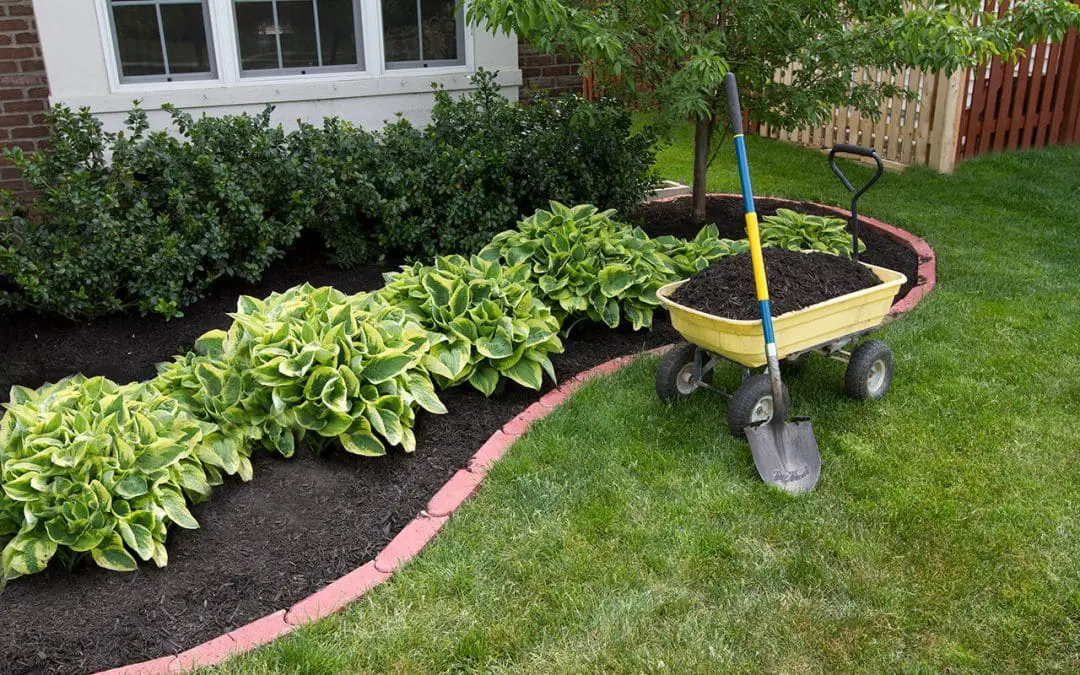
Mulching garden beds is one of the highest-return investments in budget landscaping. A two-to-three-inch layer of organic mulch suppresses weeds, retains soil moisture, and regulates soil temperature, reducing the time and money spent on watering, weeding, and plant replacement. Many municipalities offer free or heavily discounted wood chip mulch through composting programs, making it one of the most cost-effective materials available to homeowners. Applying fresh mulch once a year keeps beds looking tidy and functioning well throughout the growing season.
Prioritize High-Impact, Low-Cost Improvements
Not all landscaping improvements deliver equal visual value. Edging garden beds, keeping the lawn mowed consistently, and maintaining clean borders between lawn and planting areas create a polished, well-kept appearance without significant expense. A fresh layer of mulch, a few well-placed flowering plants near the entry, and neatly trimmed shrubs could dramatically improve curb appeal for a relatively small investment. Focusing budget dollars on the areas most visible from the street maximizes the impact of every improvement.
DIY What You Can, But Know Your Limits
Labor is one of the highest costs in professional landscaping, and taking on projects yourself eliminates that expense. Planting, mulching, edging, and basic lawn care are all well within reach for most homeowners with minimal experience. More complex projects, like grading, irrigation installation, or large hardscape work, are worth evaluating carefully before attempting without experience, since mistakes can end up costing more to fix than hiring a professional from the start would have.
Frequently Asked Questions (FAQs)
What is the cheapest way to landscape a yard?
Starting with a clear plan, growing plants from seed, dividing existing perennials, and using free or low-cost mulch from municipal programs are among the most effective ways to landscape on a tight budget.
How can I make my yard look nice without spending a lot of money?
Consistent mowing, clean bed edging, and a fresh layer of mulch create a well-maintained appearance at minimal cost. Adding a few inexpensive flowering plants near the front entry or along a walkway delivers strong curb appeal without a large investment.
Is it cheaper to landscape yourself or hire a professional?
For most routine tasks, DIY is significantly cheaper since labor typically accounts for a large portion of professional landscaping costs. Complex projects involving grading, drainage, or hardscaping may warrant professional help to avoid costly mistakes.
When is the best time of year to landscape while working on a budget?
Late summer and fall are ideal times to purchase plants, since nurseries typically discount remaining inventory as the season winds down. Starting new beds in the fall also gives plants time to establish roots before summer heat arrives, reducing the need for intensive watering the following season.
How do I keep landscaping costs down long-term?
Choosing native and climate-appropriate plants reduces ongoing water and maintenance costs significantly. Mulching annually, dividing and replanting perennials rather than buying new ones, and staying on top of basic maintenance prevent small problems from becoming expensive ones.
AWP Home Inspections provides buyer’s home inspections in West Central and Central Indiana. Contact us to request our services.