
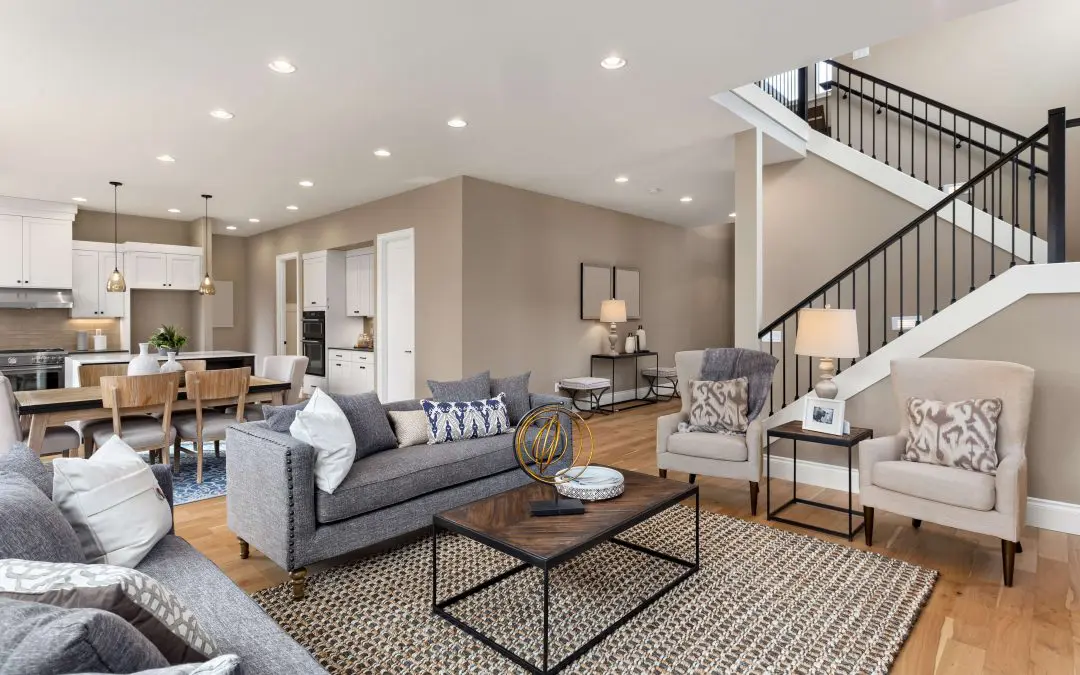
You don’t need a design degree or a decorator’s budget to create a home that feels intentional, comfortable, and genuinely yours. Good interior design is less about following trends and more about understanding a few foundational principles that make spaces feel pulled together. Whether you’re starting from scratch in a new home or looking to refresh rooms that have never quite come together, the right approach to interior design transforms how your home feels to live in.
The Interior Design Principles That Make the Biggest Difference
Most homeowners approach decorating by buying things they like and hoping they work together. Sometimes they do. More often, the result feels a little off, visually busy, inconsistent, or not as satisfying as the spaces they admire. The difference usually comes down to a handful of principles that professional interior designers apply instinctively and that anyone can learn. The most important of these is proportion and scale. Furniture that’s too small for a room feels underfurnished. Furniture that’s too large overwhelms the space. Choosing pieces proportionate to the room size and to each other is one of the fastest ways to make any space feel more considered and complete.
Start With a Cohesive Color Palette
Color is the foundation of any interior design scheme and the element that most powerfully influences how a room feels. A cohesive palette, typically one or two anchor colors supported by two or three complementary tones, creates visual harmony that makes a room feel deliberate rather than assembled over time. The goal isn’t matching, matching too closely creates a flat, sterile look. A useful starting point is the 60-30-10 rule: 60 percent of the room in a dominant color (typically walls), 30 percent in a secondary color (upholstery, rugs), and 10 percent in an accent (throw pillows, artwork). This distribution creates visual balance while leaving room for personality and contrast.
Use Layered Lighting to Transform Any Room
Lighting is arguably the most overlooked element of interior design, and getting it right has a bigger impact than almost any other single change. Most homes rely on a single overhead light per room, which creates flat illumination and does nothing to create atmosphere or highlight the room’s best features. Layering means combining three types: ambient lighting that fills the room, task lighting focused on functional areas, and accent lighting that adds depth and interest. When all three are present, the space feels warmer, more dimensional, and more designed, without a single piece of furniture being changed.
Interior Design Principles for Furniture Arrangement
How furniture is arranged shapes the entire experience of being in a room, and most homeowners push everything against the walls, which is one of the most common interior design mistakes. Floating furniture away from walls and creating conversation groupings makes rooms feel larger and far more livable. Anchor every seating area with a rug large enough to fit at least the front legs of all major seating pieces. A rug that’s too small makes even well-chosen furniture look disconnected; it’s one of the most common decorating errors in interior design. Think about traffic flow when arranging furniture. Clear pathways of at least 30 inches through the room, and an arrangement that makes sense for how the space is actually used, are the marks of a room that works as well as it looks.
Frequently Asked Questions (FAQs)
How do I find my interior design style if I’m not sure what I like?
Collect images of rooms that appeal to you without worrying about whether they match. After 20 to 30 images, look for patterns in color, tone, and style. The common threads reveal your instinctive preferences and give you a direction to guide your choices.
What’s the biggest interior design mistake homeowners make?
Buying furniture and decor piecemeal without a cohesive plan leads to the most common problems: rooms that feel inconsistent or never quite finished. Starting with a clear palette, defined scale, and an understanding of how the space will be used before purchasing anything produces far more satisfying results.
How do I make a small room feel larger through interior design?
Light colors on walls and ceilings visually expand a space. Mirrors across from windows reflect light and create the illusion of depth. Low-profile furniture with visible legs keeps floors feeling open. Vertical elements, tall bookshelves, and floor-to-ceiling curtains draw the eye upward. Eliminating clutter is equally important; small rooms feel dramatically larger when simplified.
Do I need to hire an interior designer or can I do it myself?
Most homeowners achieve excellent results without a professional, particularly for individual rooms or refresh projects. Where professional help earns its cost is in whole-home projects, renovations involving architectural decisions, or challenging room layouts that require expert problem-solving.
How do I incorporate trends without my home feeling dated quickly?
Use trends in easy-to-change elements rather than foundational pieces like sofas or flooring. Build your interior design foundation on timeless choices and layer trend-forward elements on top. When a trend passes, swapping accessories is minor. Replacing a trendy sofa is not.
AWP Home Inspections provides buyer’s home inspections in West Central and Central Indiana. Contact us to request our services.